


September 3, 2026 | Articles
Maggie Gallagher & Hill International’s Next Generation of Construction Management Excellence

When Ohio Governor Mike DeWine and First Lady Fran DeWine cut the ribbon to open the 2026 Ohio State Fair this summer, they were also cutting the ribbon for Expo 2050. Undertaken by the Ohio Expositions Commission (OEC) to revitalize the Expo Center and State Fairgrounds in Columbus, the $460 million Expo 2050 project delivered comprehensive enhancements to the site, as well as its facilities and infrastructure.
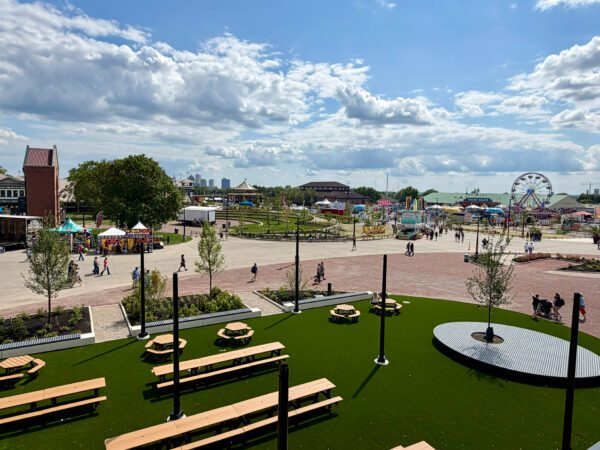
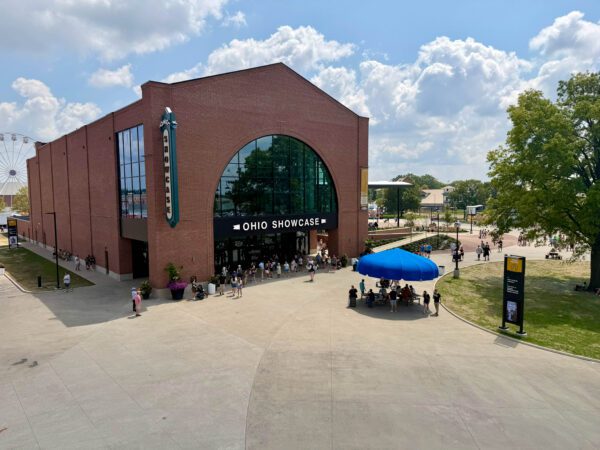
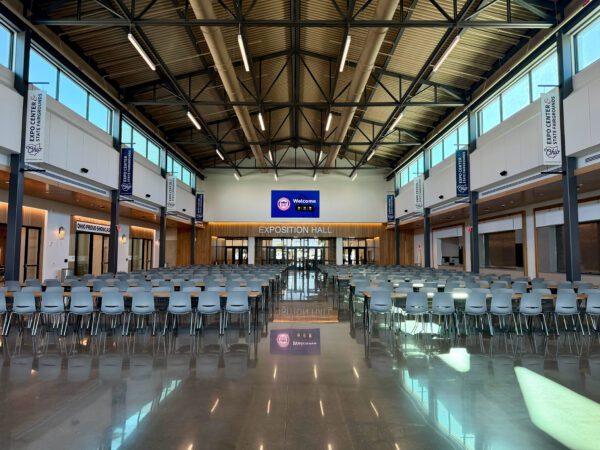
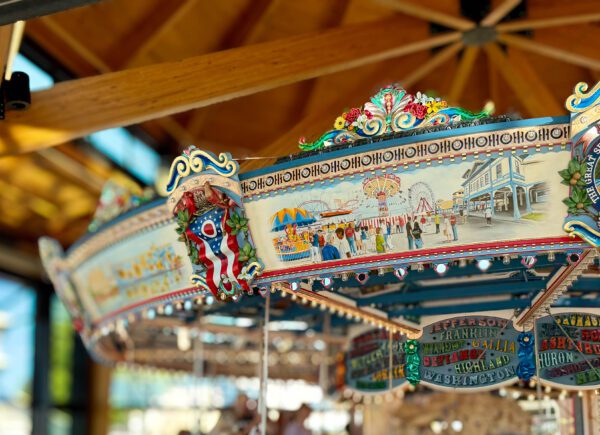
The most visible upgrades include a new carousel with handcrafted animal figures and panels celebrating all things Ohio, a new central Town Square gathering space with an amphitheater, and two new buildings: the Ohio Showcase and the Ohio Agriculture Center. The 34,000 SF Ohio Showcase features an exhibition about the state’s history, as well as dining and gathering spaces. Situated adjacent to the Town Square, it also serves as a central hub for the entire site. The Ohio Agriculture Center is a nearly 178,000 SF multipurpose hall. The facility features a 100,000 SF clear-span expo hall with a ceiling height of 31 feet (30 feet clear to the bottom of operable bulkhead) and an HVAC system that can deliver 18 air changes per hour. It also includes 10 meeting rooms that can be converted to 3 larger gathering spaces, as well as kitchens and dining areas. In addition to creating a comfortable indoor environment, the HVAC system allows the facility to safely host indoor livestock events while maintaining kitchen operations.
Other scope items included landscaping improvements, utility upgrades, a new signature entry gate, the installation of new wayfinding materials, selective demolition, building additions, upgrades to existing building systems and finishings, the installation of additional fiber optic lines and Wi-Fi access points, the construction of freestanding restroom facilities, the installation of new cameras and speakers to support security and communications, the construction of additional parking, and much more.
A Jam-Packed Schedule
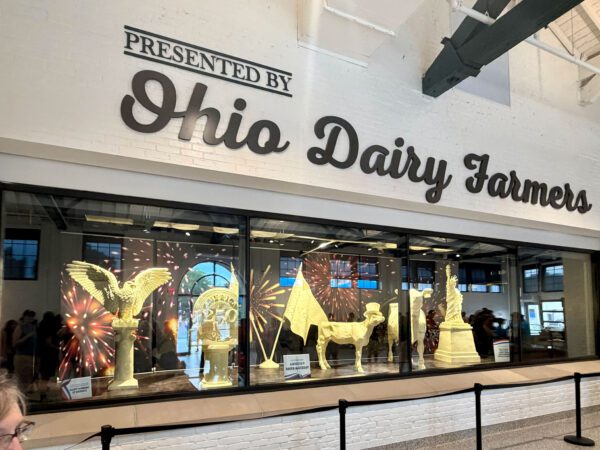
Getting such a large project ribbon-ready in time for the 171st Ohio State Fair was no small feat—especially since, during early planning, the project doubled in cost and scope while the planned completion date remained the same. The original scope of work was limited to the demolition of five existing buildings and the design and construction of two new buildings along with the installation of new infrastructure, a new iconic entry gate at the north end of the site, landscaping improvements, and the development of the new Town Square. A few months into design, following additional funding approvals, the OEC added scope that greatly expanded the project, including the renovation of and an addition to the Dairy Building, the construction of a restroom addition attached to the Bricker Building, the renovation of the North Commercial Pavilion (an existing 120-year-old building), the expansion of Wi-Fi and communications infrastructure across the site, the expansion of wayfinding across the site, additional site finishes, and the construction of an Ohio-themed carousel and outer building.
Project Director Jeannie Martin, who led Hill International’s program and project management team on the project, also notes that the Ohio Expo Center and State Fairgrounds had to remain open for more than 200 events throughout each year of the project, which began with demolition in November 2023. With double the amount of work to be completed within the same timeframe alongside major events year-round, the potential for delay-causing conflicts was high.
“With around 1.7 million SF of roofed event space in 20 buildings spread over 360 acres, the Expo Center and State Fairgrounds host everything from livestock competitions to sporting events, college ceremonies, business meetings, trade shows, marriages, and, of course, the State Fair,” Jeannie says. “We only had two construction blackout periods each year: most of October for the All American Quarter Horse Congress, the world’s largest horse show, and then about two weeks in the summer for the State Fair. For all of the other events, we had to keep construction on schedule without impacting event logistics or the guest experience on site.”
As the site representative for the OEC and the Ohio Facilities Construction Commission (OFCC), Hill was responsible for making sure construction kept moving and the project met the owner’s schedule objectives. To do so, Jeannie’s team focused on assessing the project’s safety and schedule risks, especially those associated with construction at a sprawling, active convention center campus, and mitigating those risks. For example, Jeannie regularly coordinated with the OEC and OFCC, the rest of the project team, and other stakeholders, including state agencies, elected officials, and the organizations that hold events at the Expo Center and State Fairgrounds. By keeping stakeholders up to date, Hill helped maintain support for the project and kept the team and all stakeholders aligned. This allowed the OEC and OFCC to make time-sensitive decisions on long-lead items that could have impacted the project schedule.
Jeannie and the Hill team also helped mitigate schedule risk by contributing to logistical planning to prevent conflicts, independently monitoring project progress and flagging potential issues early, overseeing work installations on site to reduce the need for rework, and promptly processing the contractor’s payment applications. These efforts helped the OEC and the OFCC drive the project forward as planned and deliver the expanded scope in time for the 171st Ohio State Fair.
Navigating the CMAR Program
Another way Hill helped the OEC and OFCC manage the project’s risks was through the careful implementation of the construction manager at-risk (CMAR) delivery method. Jeannie explains that CMAR has certain traits that can make it preferable to traditional design-bid-build or other alternative delivery methods. “The delivery method involves the development of a guaranteed maximum price (GMP), and the construction manager/general contractor or CMAR generally owns the risk of additional costs beyond that GMP,” she says. “Cost certainty was crucial for our clients, as their project was a high-visibility investment funded by tax dollars.”
Jeannie adds that CMAR involves early collaboration between the construction manager, who generally also serves as the general contractor during construction, and the rest of the project team during planning and design. “Early collaboration with the construction manager/general contractor helped us establish stronger logistical and safety plans for construction during events,” she says.
The CMAR also contributed to project success by working with the OEC, the OFCC, and Hill to formulate GMPs based on logical scope groupings the team called “shells.” The project team packaged and approved individual shells. Then, the CMAR awarded contracts to different subcontractors for the approved shells. In this way, the team was able to maintain steady construction progress.
Additionally, Hill applied best practices in contract administration and document control to help the OEC and the OFCC mitigate cost risk while working closely with the rest of the project team to proactively manage the budget. The Hill team also tracked construction activities funded by alternative funding mechanisms, such as the American Rescue Plan Act, to confirm compliance with all funding requirements. Hill’s monitoring of the budget and change management helped the owner save nearly $25 million in contingency, unused allowance money, and bid-day savings. This offset cost enabled the owner to add amenities and critical improvements to the scope, including the forthcoming replacement of a 60-year-old water main on the northern portion of the site that began to fail during the 2025 All American Quarter Horse Congress.
The Future of the Fair
Despite all the challenges, the OEC and OFCC’s project team delivered the Expo 2050 project safely, within budget, and on time for the 171st Ohio State Fair. More than 1 million fairgoers enjoyed the Expo 2050 upgrades this year, and many millions more will enjoy the Expo Center and State Fairgrounds’ additional amenities, increased capacity, improved wayfinding and site safety, strengthened utility networks, and enhanced building systems for years to come.
“There’s a whole lot for fairgoers, event attendees, Columbus residents, and visitors to enjoy—the handcrafted carousel is probably my favorite,” says Jeannie. “With all the challenges overcome and the successful cost and schedule outcomes, there’s also a lot for the OEC, the OFCC, and the entire project team to be proud of. Plus, we learned a great deal, which will be useful for the OEC and the OFCC on future projects at the site. Hill is proud to have been a part of the project, and we look forward to future opportunities to continue supporting our clients.”
To learn more about the project, reach out to Jeannie at [email protected]. For more information about Hill’s work in Ohio and around the world, visit www.hillintl.com. Hill International is a GISI Consulting Group company. Learn more at www.gisiconsulting.com.
Share
September 3, 2026 | Articles
Maggie Gallagher & Hill International’s Next Generation of Construction Management Excellence

August 25, 2026 | Articles
Saudi Arabia Could Become the World’s Largest Project Management Academy

August 2, 2026 | Articles

July 27, 2026 | Articles

June 28, 2026 | Articles
Over It, Under It, & Through It: Navigating Complexity on Mixed-Alignment Rail Programs

June 21, 2026 | Articles
Kalypso Kyriakopoulou on Hill International’s Growth in Europe

May 8, 2026 | Articles


