


September 3, 2026 | Articles
Maggie Gallagher & Hill International’s Next Generation of Construction Management Excellence

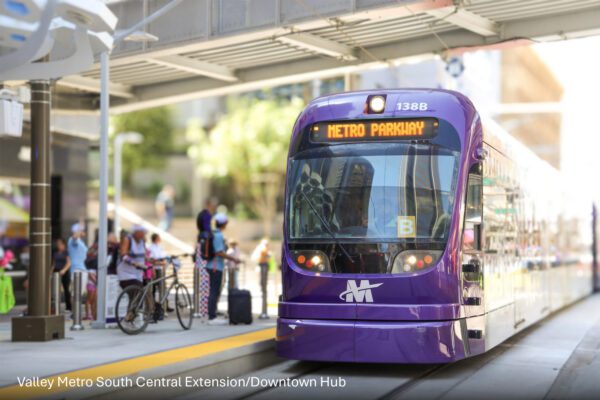
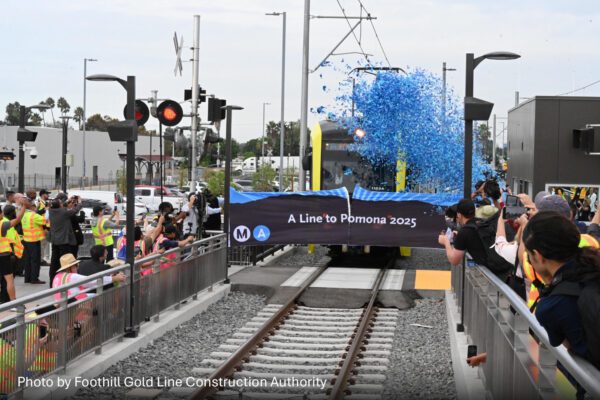
The expansion of passenger transit systems remains a priority in the United States. Last year, transit agencies opened major system expansions throughout the country, including Valley Metro’s 5.5 mile South Central Extension/Downtown Hub in Phoenix and the Metro Gold Line Foothill Extension Construction Authority’s 9.1 mile extension of LA Metro’s A Line. Additional groundbreakings (e.g. Sound Transit’s Stride bus rapid transit S3 Line in Seattle) and openings (e.g. Sound Transit’s Link light rail 2 Line) have already taken place in the first half of 2026, and many other programs are expected to commence or conclude by the end of the year.
Despite the momentum and the continued demand for transit, owners and their program teams face myriad challenges adding each new mile to their systems. One common challenge involves locating rail extensions within dense urban development. To overcome this challenge, many owners implement mixed alignments, i.e. alignments that run for at least part of their length at one grade and part of their length at another, whether surface and elevated, underground and surface, grade-separated and underground, etc. Some programs involve the delivery of mixed alignments with three or more modalities. By threading their rail systems over, under, and through busy city streets to areas with the most significant transit needs and the biggest ridership growth potential, owners can deliver more impactful transit expansions.
Compounding Challenges
From a program management perspective, a mixed alignment is usually much more complex than a comparable single-modality alignment because each modality requires specialized technical discipline expertise. To mention only a few:
Consequently, with even two different alignment modalities in a rail program, there is a proliferation of interfaces, each requiring careful management and interacting in unique ways with overall program concerns about cost, schedule, scope, political commitments, and community expectations. It’s a situation of compounding complexity, and because of the complexity, owners undertaking mixed-alignment rail programs face additional risk throughout their program’s life cycle. Even a single blind spot can lead to construction delays, long-term cost issues, poor system performance, and stakeholder dissatisfaction.
Program Management Solutions
The solution to the complexity associated with delivering mixed-alignment rail is simple: a program management partner that has experience managing the delivery of each alignment type involved in a program. Such a partner can develop and implement a management plan that accounts for all of the many interfaces on a mixed-alignment rail program; identify and procure the right design and construction consultants; validate designs and construction methodologies across the program’s components; evaluate the suitability of safety and traffic plans for construction activities at elevated, bridge, underground, trench, and/or surface sites; navigate permitting; and help develop differentiated operational training and maintenance plans—all while executing typical program management functions, including stakeholder, schedule, budget, change, and risk management.
Rail expansions continue to enhance mobility and transit access across the U.S. However, they remain expensive, lengthy, and complex endeavors, especially when program teams use mixed alignments to overcome spatial constraints. At Hill International, our Rail & Transit professionals have experience providing program, project, and construction management services for the delivery of multi-segmented surface, elevated, bridge, grade-separated, and underground rail throughout the country. We look forward to helping our clients navigate complexity and deliver their next rail programs on time, within budget, and as envisioned.

About the Author
Derrick Chan, PE, serves as Vice President, Rail and Transit at Hill International. Derrick’s experience includes both agency and consulting roles on rail, bus rapid transit, and tunnel infrastructure programs. He has helped supported agencies throughout the United States, including the Los Angeles County Metropolitan Transportation Authority, the San Francisco Municipal Transportation Agency, Miami-Dade Transit, and Broward County Transit. To speak with Derrick about your transit program, reach out to him at [email protected].
To learn more about Hill’s Rail & Transit Practice, click here: www.hillintl.com/rail-transit-practice.
Share
September 3, 2026 | Articles
Maggie Gallagher & Hill International’s Next Generation of Construction Management Excellence

August 25, 2026 | Articles
Saudi Arabia Could Become the World’s Largest Project Management Academy

August 2, 2026 | Articles

July 27, 2026 | Articles

June 21, 2026 | Articles
Kalypso Kyriakopoulou on Hill International’s Growth in Europe

May 8, 2026 | Articles


